
Scent in Hotels: Shaping the Guest Experience from the Entrance to the Corridor
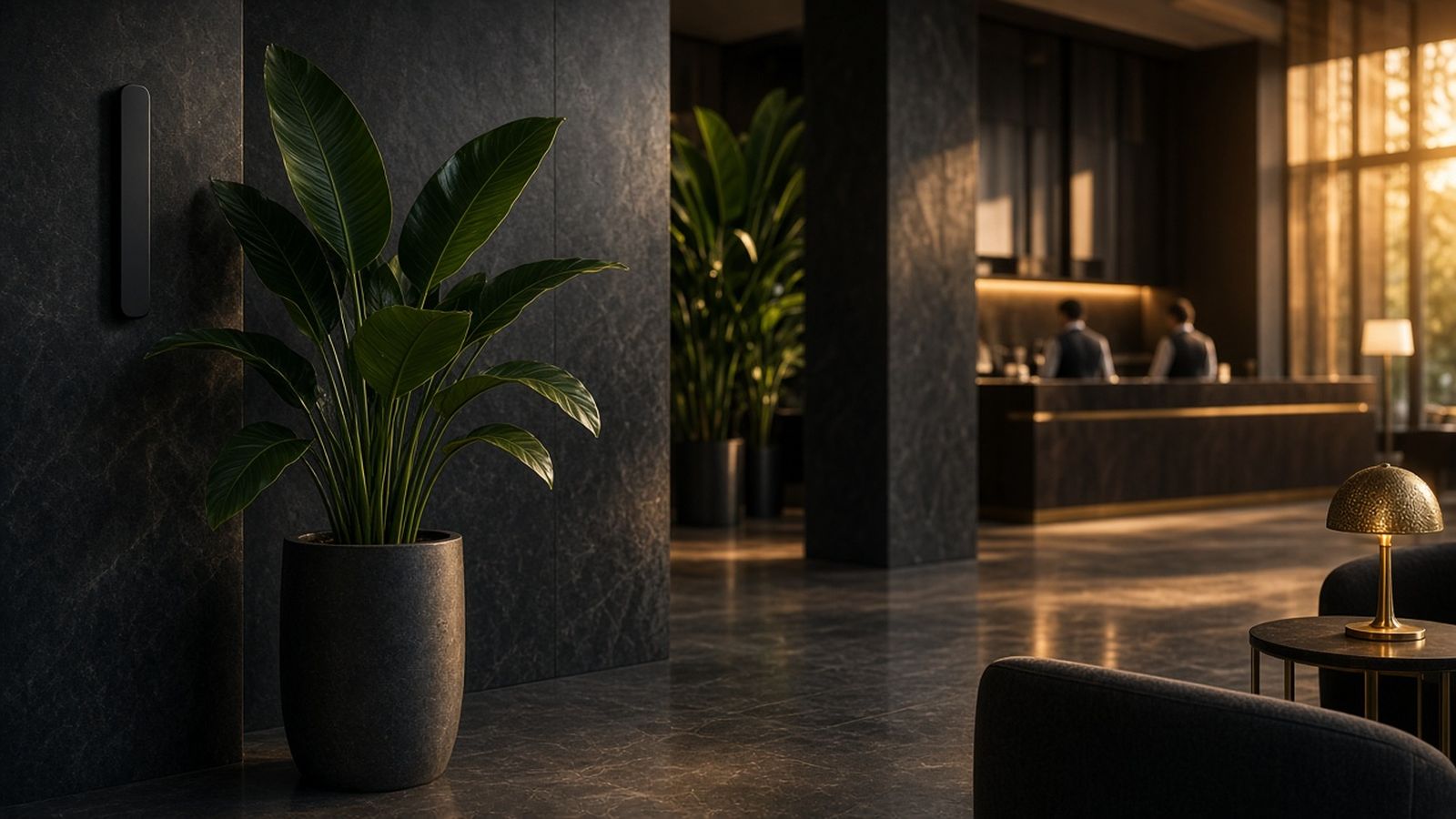
Guests form an impression of a hotel within moments of walking in, and much of it comes from things they don't consciously notice: the temperature, the sound, the light and the way the air smells. A well-chosen scent won't fix a tired lobby, but in a space that is already clean and cared for, it can make the welcome feel more complete and more memorable.
Why hotels pay attention to scent
Research gives some useful context. In one study in a four-star hotel, guests staying in a scented room appeared happier than guests in an unscented room[1]. Other research found that a pleasant ambient scent helped people remember and recognise brands, particularly ones they didn't already know[2]. Neither study is a promise of results for a particular hotel, but both explain why many hotels treat scent as part of the guest experience rather than as an extra.
Planning scent through the guest journey
The entrance and drop-off.
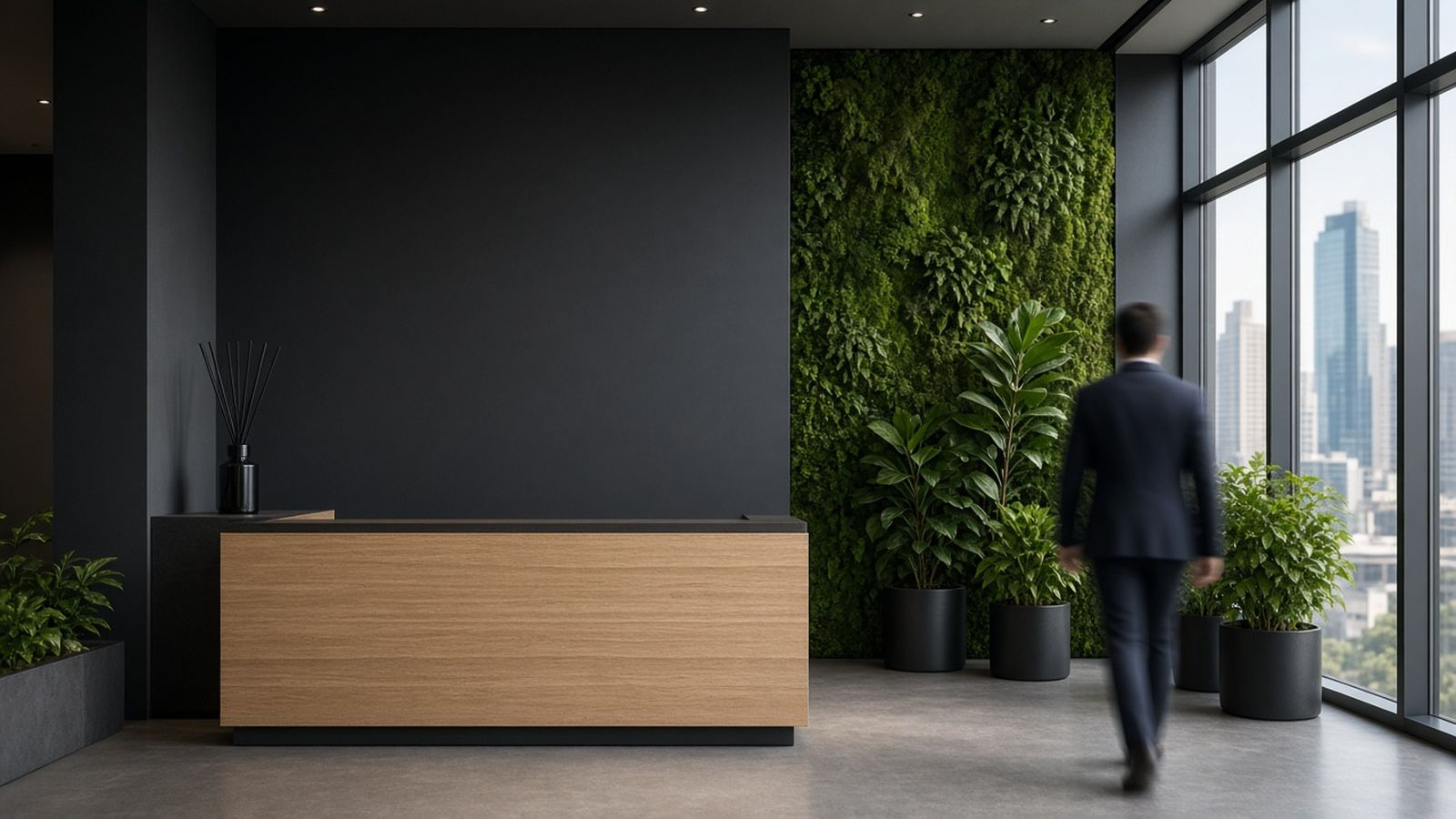
This is where the scent should first be noticed. Doors open constantly and warm air comes in from outside, so the entrance often needs its own setting.
The lobby and reception.
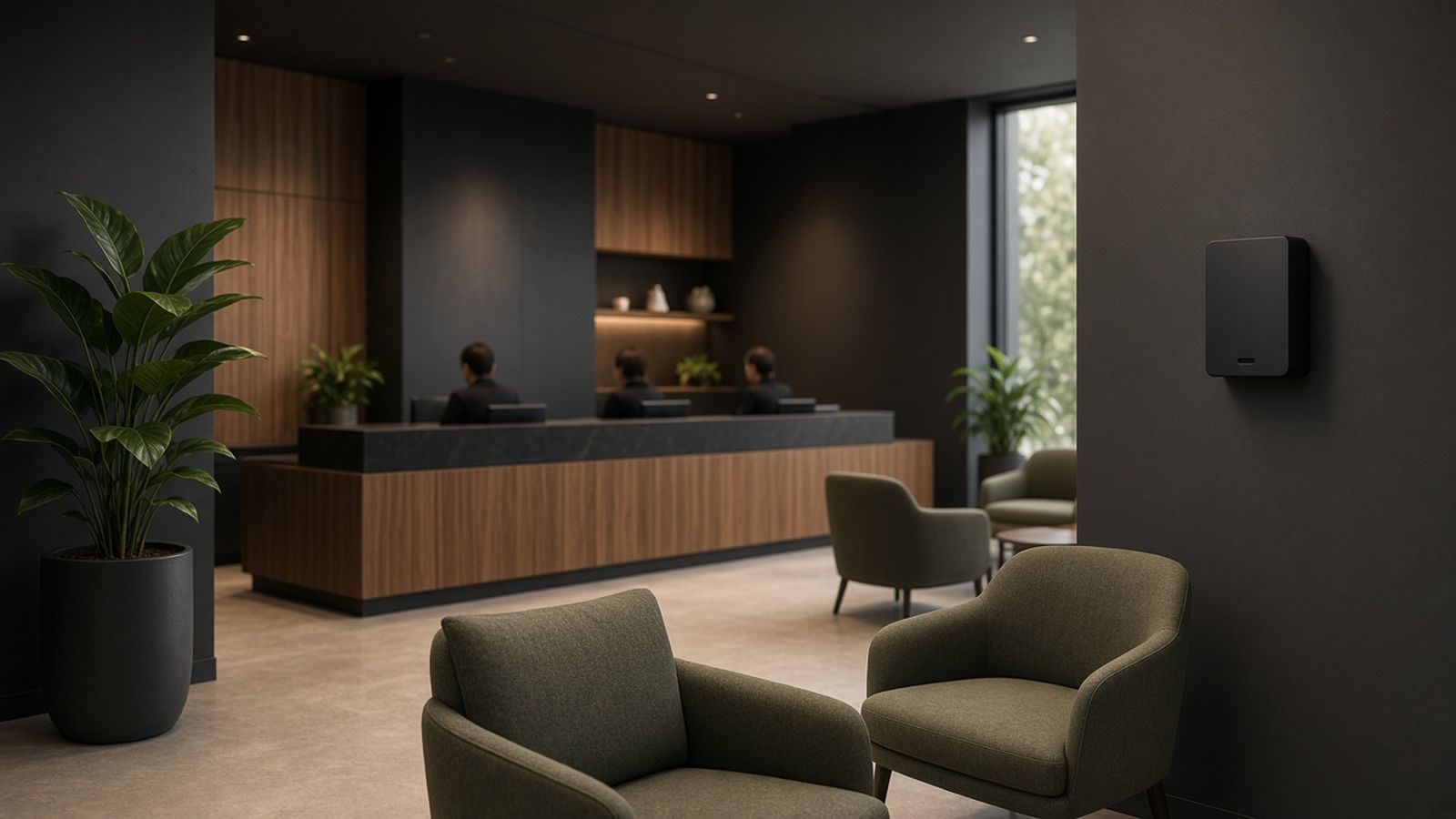
The lobby usually carries the main scent. In a high-ceilinged lobby, scenting through the building's HVAC system often spreads the fragrance more evenly than several standalone units. Reception staff sit there for hours, so units should never point straight at the desk.
Lifts, lift lobbies and corridors.
A softer version of the same scent ties the floors together and makes the walk to the room feel considered. Corridors need a light touch, because guests pass through slowly and the air moves less.
Guest rooms.
Room scenting is optional and should stay very subtle. Some guests prefer no fragrance at all, so offering an unscented option is sensible.
Restaurants, breakfast areas and the spa.
Keep dining areas very light or unscented so the scent never competes with food. A spa can use its own softer scent that sits comfortably alongside the lobby scent.
Consistency matters more than strength
A hotel scent becomes recognisable only if it's the same every day, on every floor and, for groups, at every property. That depends on routine care: refills before the oil runs out, clean nozzles, schedules that match the hotel's busy hours, and someone checking the level with a fresh nose. Staff who work in the lobby all day stop noticing the scent and may ask for it to be turned up, even when arriving guests find it just right.
Library scent or signature scent?
Many hotels start with a scent from a library and later develop a custom signature scent that belongs only to them. Both work, as long as the scent fits the hotel's style: fresh and light for a business hotel, warmer and woodier for a resort or a boutique property.
How DuraScent supports hotels
We start with a free site survey of the entrance, lobby, lifts and corridors, then recommend standalone units, HVAC scenting or a mix. You choose from our Scent Library of 40+ fragrances from European fragrance houses, or we develop a custom signature scent. Our team refills and maintains every unit, with a monthly Preventive Maintenance Visit and free emergency service. You can try it first with a 3-day free trial.
Scent supports atmosphere and impressions. It isn't a guarantee of higher ratings or revenue, and it doesn't replace cleaning or good ventilation.
Sources
Citations are shown in their original English; DOI links open the publisher’s record in a new tab.
- Anguera-Torrell, O., Álvarez León, I., Cappai, A., & Sanmartín Antolín, G. (2021). Do ambient scents in hotel guest rooms affect customers' emotions? European Journal of Tourism Research, 27, 2701. https://doi.org/10.54055/ejtr.v27i.2120
- Morrin, M., & Ratneshwar, S. (2003). Does it make sense to use scents to enhance brand memory? Journal of Marketing Research, 40(1), 10–25. https://doi.org/10.1509/jmkr.40.1.10.19128