

Why Us
Managed from the first survey to every refill
You get a space that smells right every day. We take care of the machines, the oil and the upkeep.
Buying it yourself vs DuraScent service
Why subscribe instead of buying a diffuser?
Buying your own machine looks easy at first — until you add up the oil, the refilling and the repairs. With DuraScent, all of that is part of one monthly service.
Buying your own diffuser DIY
- Upfront spend on machinesMoney tied up in equipment that can date quickly.
- Buying fragrance oil again and againYou have to source, stock and choose it yourself.
- Refilling it yourselfIt takes up your staff’s time.
- Maintenance and repairs are on youA broken machine means a room with no scent.
- Inconsistent scentBetter to leave this part to the experts. :)
DuraScent All-inclusive
- No machines to buyOur team installs the unit at your premises.
- Fragrance oil includedChoose from 40+ scents from European fragrance houses.
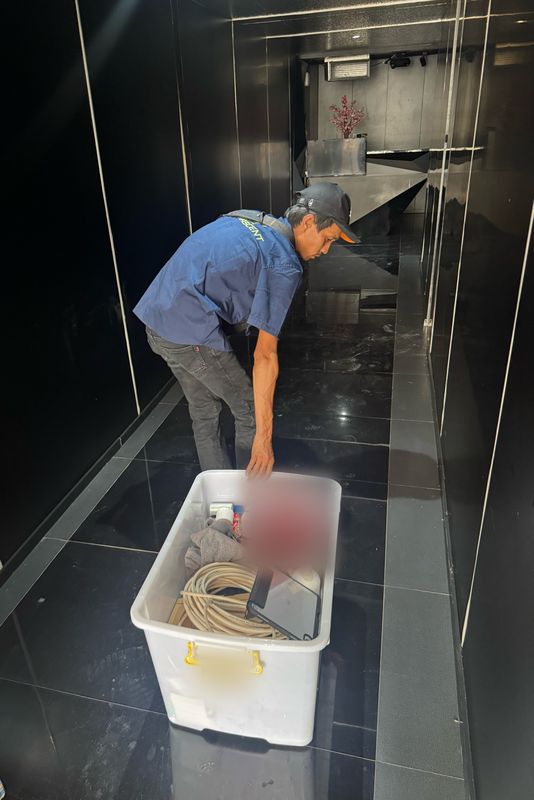
- Regular refills by our teamYour staff don’t have to lift a finger.
- Maintenance includedFree emergency service.
- Scheduled scent, 10 h a day by defaultAdjustable to your opening hours and your space.
Note: DuraScent doesn’t sell diffusers or fragrance oils. We’re a managed service on a monthly basis.
Service commitment
Machine playing up? That’s our problem.
Keeping your space scented is our responsibility.
Free emergency service
Report it on WhatsApp and our technician will take care of it at no extra cost.
Damage covered
We cover machine repairs, except damage caused by misuse or negligence.
Same-or-better replacement
If a machine needs replacing, you get a unit of the same or a higher specification.
Regular refills & maintenance
Oil refills, machine maintenance and routine checks during our regular visits are part of the monthly service.
Low-risk start
Try it first. Decide after.
Free site survey
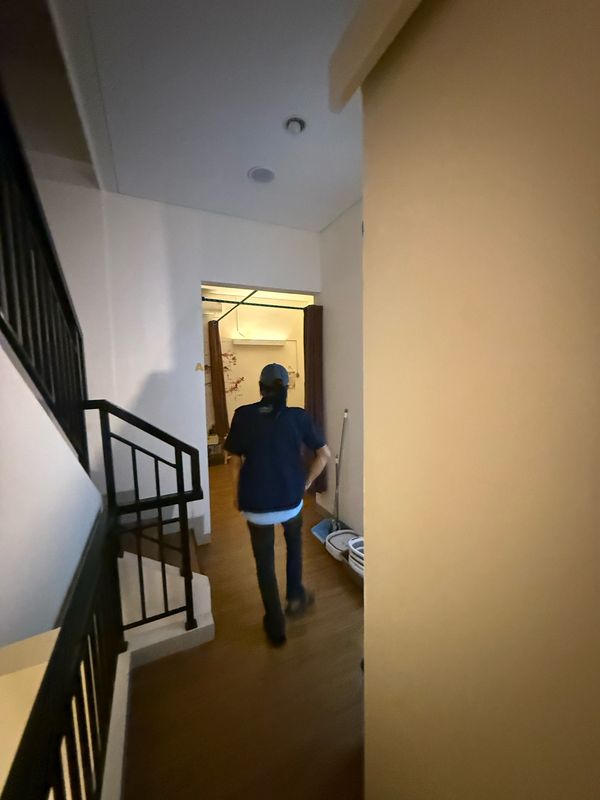
We look at your space and recommend a setup before anything is agreed.
3-day free trial
Experience the scent in your own space before you decide.
Monthly service
The service runs month to month, and the terms are explained clearly before you start.
Research on scent
Evidence, not hype
Researchers have long studied how ambient scent affects people — in shops, restaurants, hotels, workplaces and waiting rooms. The findings are interesting, but every study has its own context — we share them as background, not as a promise of results.
We cite only peer-reviewed studies — and link every source.
-
1990 · Journal of Applied Social Psychology [1]
Pleasant scent, higher goals
In a lab study, a pleasant room scent led participants to set higher work goals.
-
1996 · Journal of Marketing [2]
Scented stores were rated more positively
Shoppers tended to rate a store and its products more favourably in a softly scented environment than in an unscented one.
-
2003 · Journal of Marketing Research [3]
Scent helps brands be remembered
A pleasant ambient scent helped people remember and recognise brands, especially brands they didn’t already know.
-
2005 · Physiology & Behavior [4]
A calmer dental waiting room
Orange and lavender scents in a dental waiting room reduced anxiety and improved patients’ mood.
-
2006 · International Journal of Hospitality Management [5]
Diners stayed longer
In a restaurant, a lavender scent led customers to stay longer and spend more.
-
2013 · Journal of Retailing [6]
Simple scents worked better
In an in-store study, a simple, easy-to-process scent was linked to higher spending; a more complex scent didn’t show the same effect.
-
2021 · European Journal of Tourism Research [7]
Happier hotel guests
In a four-star hotel room, guests in the scented room appeared happier than those in an unscented one.
Sources
Full references for the studies above. Citations are shown in their original English; DOI links open the publisher’s record in a new tab.
- Baron, R. A. (1990). Environmentally induced positive affect: Its impact on self-efficacy, task performance, negotiation, and conflict. Journal of Applied Social Psychology, 20(5), 368–384. https://doi.org/10.1111/j.1559-1816.1990.tb00417.x
- Spangenberg, E. R., Crowley, A. E., & Henderson, P. W. (1996). Improving the store environment: Do olfactory cues affect evaluations and behaviors? Journal of Marketing, 60(2), 67–80. https://doi.org/10.1177/002224299606000205
- Morrin, M., & Ratneshwar, S. (2003). Does it make sense to use scents to enhance brand memory? Journal of Marketing Research, 40(1), 10–25. https://doi.org/10.1509/jmkr.40.1.10.19128
- Lehrner, J., Marwinski, G., Lehr, S., Johren, P., & Deecke, L. (2005). Ambient odors of orange and lavender reduce anxiety and improve mood in a dental office. Physiology & Behavior, 86(1–2), 92–95. https://doi.org/10.1016/j.physbeh.2005.06.031
- Guéguen, N., & Petr, C. (2006). Odors and consumer behavior in a restaurant. International Journal of Hospitality Management, 25(2), 335–339. https://doi.org/10.1016/j.ijhm.2005.04.007
- Herrmann, A., Zidansek, M., Sprott, D. E., & Spangenberg, E. R. (2013). The power of simplicity: Processing fluency and the effects of olfactory cues on retail sales. Journal of Retailing, 89(1), 30–43. https://doi.org/10.1016/j.jretai.2012.08.002
- Anguera-Torrell, O., Álvarez León, I., Cappai, A., & Sanmartín Antolín, G. (2021). Do ambient scents in hotel guest rooms affect customers’ emotions? European Journal of Tourism Research, 27, 2701. https://doi.org/10.54055/ejtr.v27i.2120
Responsible scenting: scent helps create atmosphere and impressions — it isn’t a guarantee of higher sales or ROI, and it doesn’t replace cleaning or good ventilation. Results vary from space to space.